
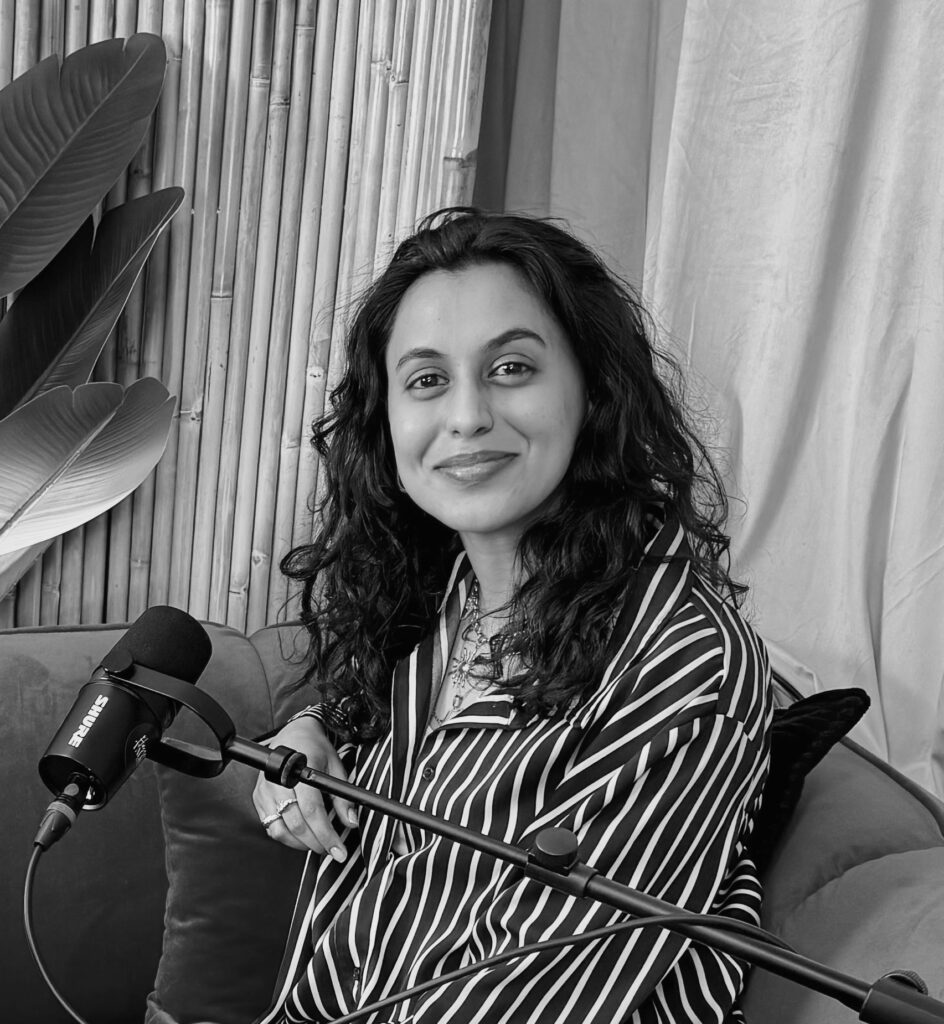
In this edition of our Industry Speaks: Rising Stars Winner Spotlight series, we speak with Zenobia Sayed, Founder and Strategy Consultant at At the Power Table Podcast, and a recipient of the CHARGE Rising Star in Energy Branding recognition.
With a passion for making the energy sector more accessible, relatable and inclusive, Zenobia is championing the role of storytelling, representation and meaningful conversations in shaping the future of energy.
In this interview, she shares her perspectives on the importance of humanising the energy transition, building trust through effective communication and ensuring that diverse voices have a seat at the table.
1. At the Power Table Podcast was built on the idea of bringing forward voices that “wouldn’t typically be given a stage.” How do you decide who gets a seat at that table?
People often ask who my dream podcast guests are, expecting me to name the most well-known figures in the energy sector. Honestly, that’s never my answer.
The podcast was founded to provide a platform for the people who are driving the energy transition forward, regardless of their background, gender, age, level of experience, or profile within the industry. We’re looking for authentic conversations with people who genuinely care about what they do and are excited by it.
So rather than deciding who does or doesn’t get a seat at the table, we actively go looking for the people doing the work and loving it. The energy sector is incredibly rich in expertise, perspectives, and lived experiences, and that’s what we want to showcase.
Ultimately, we want listeners to see role models they can relate to, guests to recognise the value of their own stories, and everyone involved to learn something new from the conversation.
2. Your guiding question is “would this make sense to my mum?” How does that simple test shape the way you approach a sector known for jargon and complexity?
I work in the energy industry and I absolutely love it. There’s always something new to learn, another challenge to solve, and another piece of the puzzle to figure out. But I’ve realised that the more excited I get about a topic, the easier it is to lose people who aren’t immersed in the industry every day.
“Would this make sense to my mum?” is my way of staying grounded. It reminds me to slow down, explain concepts clearly, and bring people along on the journey rather than assuming they already understand the technical detail.
The reality is that the energy transition needs everyone to be part of it. If we’re only speaking in acronyms, technical language, and industry shorthand, we’re excluding the very people whose support and participation we need. The goal isn’t to simplify the challenge itself, but to make sure more people can understand it, engage with it, and get excited about it too.
3. Your audience skews female and largely younger, in a sector where progression for women remains a challenge. What does that tell you about who’s actually hungry for these conversations?
For me, it reinforces the importance of representation.
People need to see others they can relate to. When you hear someone with a similar background, experience, or perspective talking about their journey, it becomes easier to imagine yourself in that position too.
I’m not convinced that men are any less interested in these conversations. What I do think is that being a female host who actively seeks out diverse perspectives naturally attracts audiences who may not always feel represented elsewhere.
That’s exactly why giving a platform to voices that don’t traditionally get one is so important. It helps us reach new audiences, bring fresh perspectives into the conversation, and create a space where more people feel like they belong in the industry. And the more diverse the conversation becomes, the stronger the sector will be as a result.
4. You built this as a self-funded, one-person passion project alongside your day job. What has running it taught you about leadership without formal authority or resources?
At the risk of sounding like a complete cliché, I’m often reminded of the saying, “Find something you love, and you’ll never work a day in your life.”
I juggle a demanding day job, a busy social life, and all the usual challenges of trying to be a functioning adult. Yet somehow, I still find the time and energy to run the podcast. So, one lesson is that there really is some truth in the idea that if you’re passionate enough about something, you’ll make the time for it and genuinely enjoy doing it.
The second lesson is probably the flip side of that coin. Leading something without formal authority, a budget, or a team means constantly balancing ambition with reality. There is always more that could be done, another episode that could be recorded, another idea that could be explored.
Some days that’s motivating, and some days it’s challenging. In those moments, I come back to why I started in the first place. I’ve learned that leadership isn’t always about managing people or resources. Sometimes it’s about consistently showing up, creating value, and bringing people together around a shared purpose, even when the only person driving it forward is you.
5. Where do you want to take the podcast next, and what would success look like for you a year from now?
For me, today and hopefully forever, success is still measured one person at a time.
It’s someone listening and saying, “Ah, I get it now. That makes sense.” Better still, it’s that understanding translating into action, whether that’s pursuing a career in the sector, championing a new idea, or simply feeling more connected to the energy transition and their role within it.
Sometimes that definition of success can feel almost too modest in a world that tends to measure impact through follower counts, downloads, or growth metrics. But the podcast was never designed to become a large enterprise. We have plenty of those already.
What I’m trying to build is something different: a space where people can have honest conversations, learn from one another, and feel part of a community working towards a common goal. If, a year from now, we’re reaching more people, showcasing even more diverse voices, and helping more listeners feel informed, empowered, and inspired to contribute to the energy transition, I’d consider that a success.
Because ultimately, meaningful change doesn’t happen because a podcast gets bigger. It happens because more people feel they have a place in the conversation and the confidence to be part of the solution.
We also welcomed Zenobia to the CHARGE Energy Branding Podcast to explore why the energy transition is as much about people as it is about technology. The conversation delves into the power of authentic storytelling, community engagement and representation in making the energy transition more inclusive and accessible.
Listen to the episode: Who Gets a Seat at the Energy Table?