

As part of the CHARGE Awards 2026 spotlight series, we spoke with enjoyelec about the story behind their AI-powered energy management platform. In a year when CHARGE is asking how to build an agile energy brand in a disrupted world, the team shares how they stand out in a crowded market, how their brand has grown alongside their technology, and how they are earning trust in AI-driven energy management as they expand.
1. For those who may not know enjoyelec, can you tell us a little about the company?
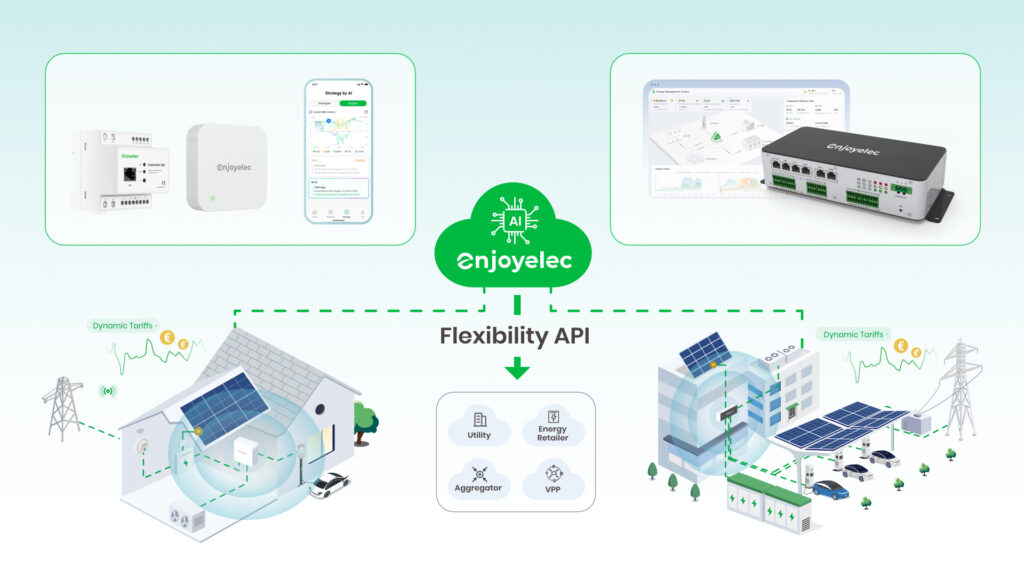
enjoyelec is a technology company providing AI-powered, integrated cloud-edge-device energy digitalization solution that transforms fragmented, distributed energy assets at scale into high-quality, aggregable and dispatchable flexibility resources. We develop local controllers, AI-powered cloud platforms, and applications that connect and coordinate diverse distributed energy assets, including solar PV, batteries, EV chargers, heat pumps and smart meters. By combining on-site control with AI optimisation in the cloud, our system manages these assets around dynamic tariffs, solar generation, household or site demand, and grid limits.
Our aim is practical: to help households, businesses, and energy partners lower energy costs, maximise solar self-consumption, and turn installed equipment into flexible resources that support a more efficient and resilient energy system.
2. enjoyelec’s vision is “Driving Clean Technologies, Enabling People to Enjoy Sustainable Living.” How does this vision shape the solutions you build and the value you aim to create?
At the heart of this vision is a practical belief: clean technologies create the greatest impact when they work together and are easy to use. This shapes our focus on energy management rather than individual devices. We connect solar PV, batteries, EV chargers, heat pumps, and other distributed assets, then coordinate them around energy demand, dynamic tariffs, and grid requirements.
By combining local control with cloud-based AI optimisation, we help households and businesses reduce costs, use more renewable energy, and gain greater value from their assets. Making these assets flexible also enables energy partners to support demand response, VPPs, and wider energy markets, contributing to a more efficient and resilient energy system.
3. What makes enjoyelec distinctive in an energy market where many brands are competing for attention?
What makes enjoyelec distinctive is the combination of open interoperability, cloud–edge control, and AI-powered optimisation across residential and C&I applications.
Open interoperability. Energy sites rarely rely on one manufacturer. Our platform connects diverse assets across brands and supports standardised protocols such as EEBUS in residential systems. Today, our integration coverage spans more than 120 hardware brands, over 30 EV brands, and more than 45 energy retailers.
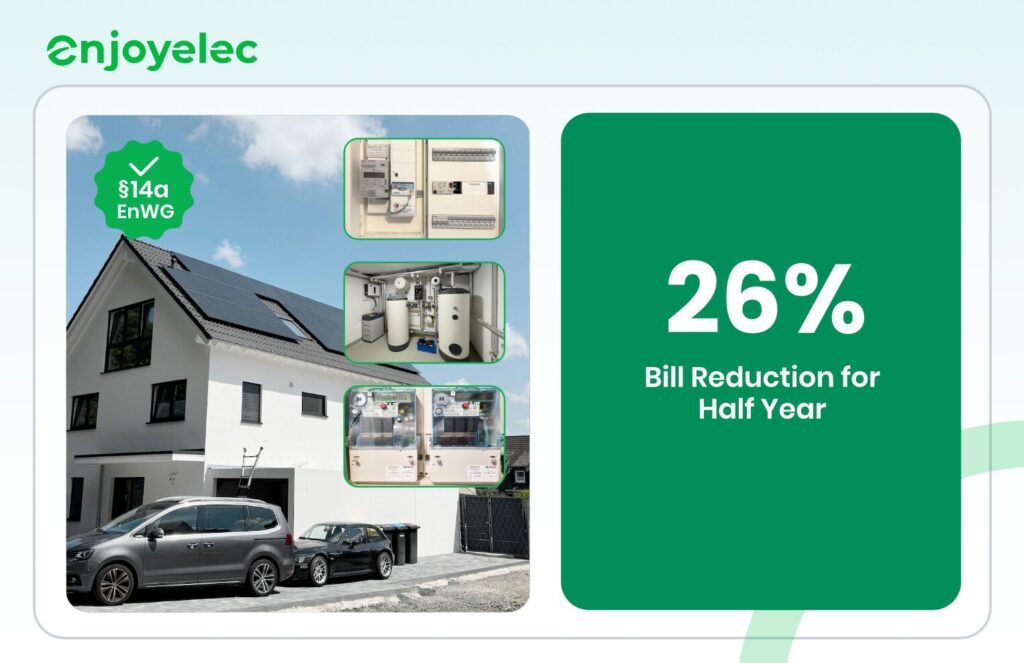
Reliable cloud–edge control. Local controllers coordinate assets in real time around dynamic tariffs, site limits, and grid requirements, including those associated with §14a EnWG in Germany. Essential strategies continue when cloud connectivity is interrupted, while the cloud supports forecasting, portfolio management, and remote optimisation.
Practical AI optimisation. AI turns forecasts, tariffs, and demand data into coordinated actions that help customers reduce costs and maximise the value of their energy assets.
4. You talk about enabling homes to support a more flexible and resilient grid. Can you explain why that matters and what it means for a normal household?
Each household has a complex mix of energy devices. Keeping the grid stable requires coordinated control of both generation and consumption, including power monitoring, necessary power limits and controlled exports to the grid. These measures may also form part of local grid rules or regulatory requirements.
For a household, this means responding to the grid’s needs while maintaining comfort and reliable energy use. Our home energy management system helps manage these requirements by coordinating batteries, EV charging and heating within the user’s priorities and the system’s operating limits, enabling daily smart energy participation.
In markets with suitable programmes, households may also receive payments or incentives for providing flexibility. Each home’s contribution is small, but together these distributed resources can reduce pressure on the grid and support a more stable, resilient and sustainable energy system.
5. Your brand identity is often described as approachable and consumer-facing rather than purely technical. Was that positioning a deliberate strategy, or something that evolved as the company grew?
enjoyelec puts users at the centre, with strong technical capabilities at its core. We are building an independent, third-party energy management system with an open ecosystem, and we continually work to expand its compatibility.
We support eight communication protocols, including EEBUS, OpenADR, OCPP etc., integrate devices from 120+ hardware brands, and connect to five electricity markets and 45+ electricity retailers. These connections help us provide smooth and effective experience for users and customers.
Our aim is to make this technical capability simple to use. For households, that means making energy flows, device status, and savings easy to understand. For installers, OEMs, and energy companies, it means simpler commissioning, monitoring, and operation. As we expanded into C&I, our communication became more technical where necessary, but the principle remained the same: explain what the system does, the limits it respects, and the value it delivers.
6. enjoyelec has attracted backing from major names like BP, Volvo, and Porsche Ventures. How visible is that institutional support in your public brand story, and how important is it to your credibility with customers?
The backing of bp Ventures, Alliance Ventures (the venture capital arm of the Renault–Nissan–Mitsubishi Alliance), Volvo Cars Tech Fund, Porsche Ventures is an important and visible part of our story. It signals confidence from established energy and mobility businesses in our energy management and battery health technologies, while bringing valuable industry perspectives as we grow.
We also make our brand story tangible through practical collaboration. Alongside our work in energy management and battery health, we have already deployed vehicle-to-grid (V2G) pilots, testing our technology in real operating conditions. These collaborations keep us close to emerging industry needs and help us explore new opportunities in the European energy market.
At the same time, we believe lasting trust is built through compatible products, reliable operation, successful deployments, and measurable results. We see institutional backing as a strong foundation-one that we aim to reinforce through consistent execution and customer value.
7. Europe’s energy transition is moving fast, with more households expected to need smarter energy control in the next few years. How does enjoyelec help accelerate the energy transition?
As Europe’s energy transition accelerates, renewable generation and demand do not always align, leaving clean electricity underused or creating pressure on local grids. enjoyelec provides an intelligent energy management system that brings together electricity prices, device capabilities and grid requirements.
Our solutions support devices from 120+ hardware brands, with integrations that can be extended to meet users’ needs. This enables households and businesses with different combinations of equipment to adopt coordinated energy management. We can also work with hardware partners to embed energy intelligence into heat pumps, battery storage and solar equipment, jointly offering integrated solutions.
Flexibility is another important part of this transition. We are advancing applications such as V2G and flexibility participation, with pilots already deployed. By making energy assets easier to connect, coordinate and adjust, we help users make better use of renewable electricity while supporting a more flexible energy system.
8. As enjoyelec B.V. expands into new markets, what considerations will shape how the brand needs to evolve to maintain relevance and credibility at scale?
As we expand, enjoyelec reflects the growing role of homes and commercial and industrial microgrids as flexible, connected energy resources. For users, the priorities remain practical: managing energy costs, maintaining comfort and reliable operation, and gaining value from the flexibility of their energy assets.
We are promoting work with aggregators and electricity retailers to bring these distributed resources into flexibility markets through virtual power plants (VPP). Our brand should make this evolving role understandable, with benefits that are relevant to local conditions and customer needs. Credibility will come from compatible solutions, reliable delivery and demonstrated customer value.
9. AI is becoming central to how energy gets managed, but public trust in AI-driven systems varies. How do you think about building consumer confidence in AI making decisions about their home energy use?
Our approach is to make AI transparent, data-driven and governed by clear operating limits. We comply with GDPR and apply safeguards to protect users’ privacy and data security. Our product has also passed cybersecurity validation by the European Network for Cyber Security (ENCS). Our technical capabilities extend from product integration to tools supporting the implementation of industry standards, with cybersecurity remaining a core priority.
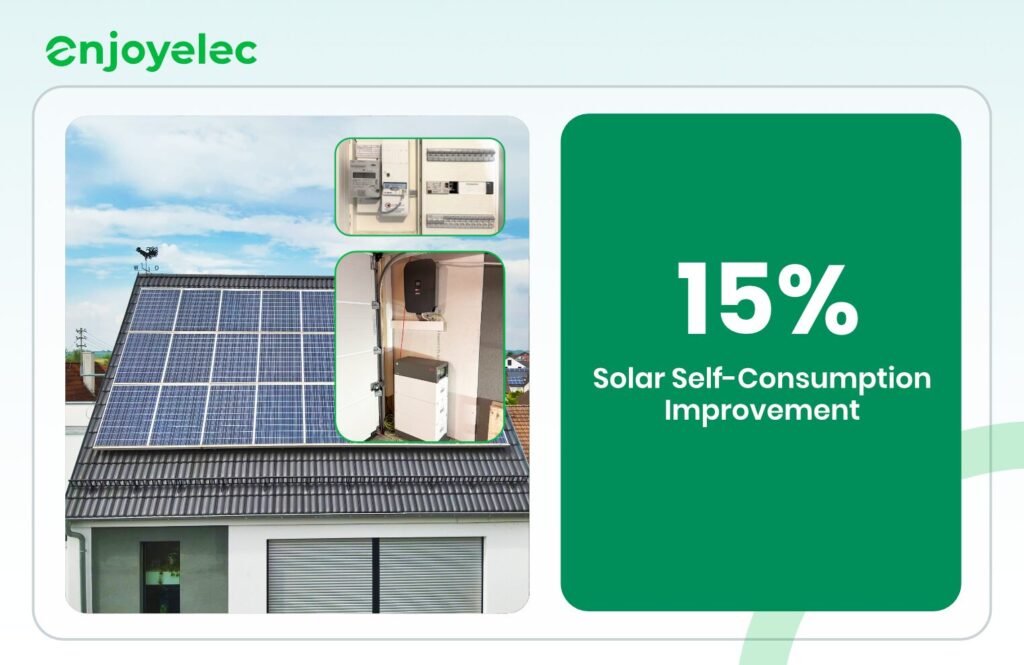
At its core, our AI serves end users. Through AI-based optimisation and strategy execution, we manage energy in line with users’ needs and interests. Strategies include peak shaving, energy trading, self-consumption, V2G, and smart charging, depending on the system and market conditions.
For users, this translates into tangible benefits: better control of energy costs and greater use of the renewable electricity they generate. When users experience these benefits in daily life and know that their data is protected, they gain confidence in allowing AI to make decisions about their home energy use.