
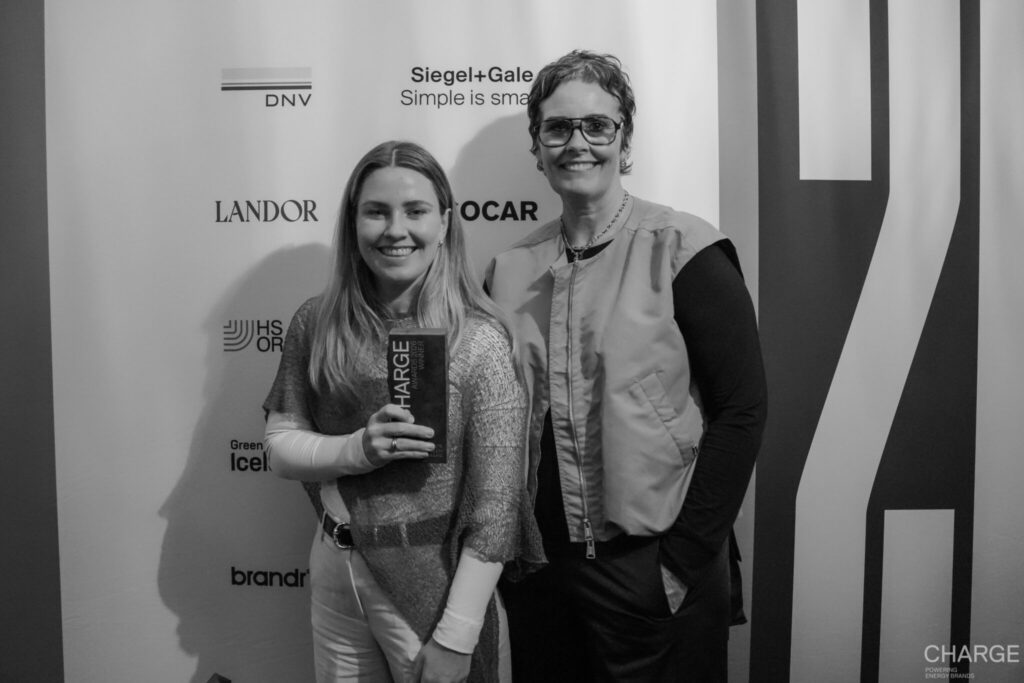
In this edition of our Industry Speaks: Winner Spotlight series, we feature HS Orka, winner of the World’s Best Green Brand at the CHARGE Europe 2026 Awards.
As Iceland’s third-largest energy producer, HS Orka has spent more than 50 years harnessing renewable energy through geothermal and hydropower resources. Guided by its brand philosophy of Respectful Innovation, the company is demonstrating how responsible energy production can extend beyond generating electricity to create lasting value for communities, businesses and the environment.
In this interview, HS Orka shares how its commitment to sustainability and innovation shapes its brand, from authentic storytelling and community engagement to initiatives such as its Resource Park. The team also explores the importance of building trust, demonstrating tangible environmental impact and communicating sustainability through credible, meaningful stories.
1. For those who may not know HS Orka, can you tell us about the company and its role in Iceland’s energy system?
HS Orka is Iceland’s third-largest energy producer. For more than 50 years we have produced heat and electricity from renewable sources. Today we run two geothermal power plants on the Reykjanes Peninsula and three hydropower plants in the south, east and west of Iceland. Our mission is to harness renewable resources responsibly while giving our community reliable, efficient service. That means we are more than just power producers. We are part of the everyday lives of the people around us, from the hot water in their homes to the businesses that grow alongside our plants.
2. Your brand idea is “Respectful Innovation”. How does it shape the way you generate energy and work with communities?
It holds together two things that are sometimes seen as opposites. “Respectful” is about responsibility, our guiding principle: respect for the resource, nature, and the communities we serve. Geothermal reservoirs have to be managed carefully over decades, and we take that long-term duty seriously. “Innovation” is about progressiveness, our driving force: always looking for better and smarter ways to utilize what nature gives us. In practice, we don’t treat new technology or new projects as goals in themselves. Every step forward has to earn its place by being both sustainable and good for the community as a whole. That shapes how we drill, how we share information, and how we listen before we act.
3. What makes HS Orka distinctive in a market where many renewable energy brands are competing for attention?
We have come a long way in utilizing multiple streams from geothermal resources with a power plant at the centre of an ecosystem of value. Svartsengi Power Plant was a pioneer in producing both electricity and hot water for district heating from one geothermal source. What we once saw as waste (brine) became the start of the Blue Lagoon and the Resource Park. We are also distinctive because of where we operate. The Reykjanes Peninsula is one of the most geologically active places on earth, and recent volcanic activity near Svartsengi has tested our resilience and our bond with the community. Keeping heat and power flowing to people through most of that time is the truest proof of what we stand for.
4. Your research showed people understood what you produce but not the wider value you create. What did you learn, and why was it the right moment to tell the story differently?
We learned that people saw us in a narrow way, as a producer of megawatts, while much of our real impact was invisible in a way. We realized we had been telling our story too modestly and too technically. The timing mattered. The energy transition puts renewable energy at the centre of public debate, and people are rightly asking harder questions about what “green” really means. At the same time, recent volcanic events put our role in the community in sharp focus. It was the right moment to show the full picture: not just what we produce, but what that production makes possible.
5. Respectful Innovation was already embedded in the company for decades. How did you bring it forward as a brand without it feeling like something new layered on top?
We started telling our own story through the words and imagery of our own people, not with a slogan. We looked at what we had actually done: developing long partnerships in the Resource Park and working every day to invent more ways to utilize the resource streams. Then we asked what connected all of it and “Respectful Innovation” emerged. It is a true description of who we are and what we do, and it didn’t need to be “sold” internally. We also kept the brand grounded in proof. Every claim is backed by something real that people can see, visit or measure. When a brand describes who you already are, it feels like recognition, not decoration.
6. The Resource Park turns geothermal by-products into resources for other businesses. Why does it matter to your brand story, and how does it show what renewable energy can do beyond generating power?
The Resource Park is a respectful innovation in its most visible form. Since the 1970s, a community of businesses has grown around our plants, using streams from geothermal resources that would otherwise be lost. Today around ten companies are a part of The Resource Park. These companies span sectors from aquaculture to tourism, wellness, cosmetics, and biotech. The Resource Park shows that renewable energy is not only about replacing fossil fuels. It can be the foundation of a circular economy that creates jobs, products, and knowledge where it operates. That is the wider value we want people to understand.
7. You chose real people and places for your photography and film. Why was that important in building trust, and what advice would you give other brands making complex energy topics feel human?
Trust is built on honesty, and stock imagery and models would have undermined the very thing we wanted to say. Our neighbors are familiar with the landscape and the friendly faces in the images. If we had shown anything else, they would have noticed. Portraying our own employees, also in their free time, in familiar locations, allows people to see that the story is real and that they are part of it. My advice to other brands: start with people, not technology. Explain the “why” before the “how”. Show the places where your work happens and have the people tell the story. Complex topics become understandable when someone you can relate to explains why they matter.
8. As HS Orka invests in future capacity and new geothermal exploration, how will the brand need to evolve to keep earning the trust of the communities it’s part of?
Growth has to be earned, not assumed. As we explore new areas for development, the “respectful” side of our brand becomes even more important. That means engaging early, being open about what we know and what we don’t and showing how new projects will benefit the communities around them. It also means applying the same Resource Park thinking from day one, so that each new development creates wider value, not just more megawatts. The brand will need to keep listening as much as it speaks. Trust is not something you win once. You renew it with every project, every conversation, and every decision.
9. What would you say to a company considering a nomination for the World’s Best Green Brand, and what advice would you give on telling their sustainability story?
Go for it. The process itself is valuable, because it pushes you to look honestly at what you do and why it matters. My advice on telling the story: lead with proof, not promises. Be specific about what you have achieved, and honest about what still needs improvement, since audiences quickly see through vague claims. Find the idea that is truly yours, rooted in your history and culture, rather than borrowing the language everyone else uses. And remember that sustainability is ultimately about people. If you can show how your work makes life better for real communities, your story will carry itself.
every decision.